What does Navratri mean?
Nav means nine, ratri means night. Navratri is nine nights, and on each night families honour one of nine forms of Goddess Durga. These forms are called the Navadurga. The festival comes in autumn (Sharad Navratri), and in 2026 it runs from Sunday 11 October to Monday 19 October. Vijayadashami, also called Dussehra, follows on 20 October.
What is the story of Navratri, in simple words?
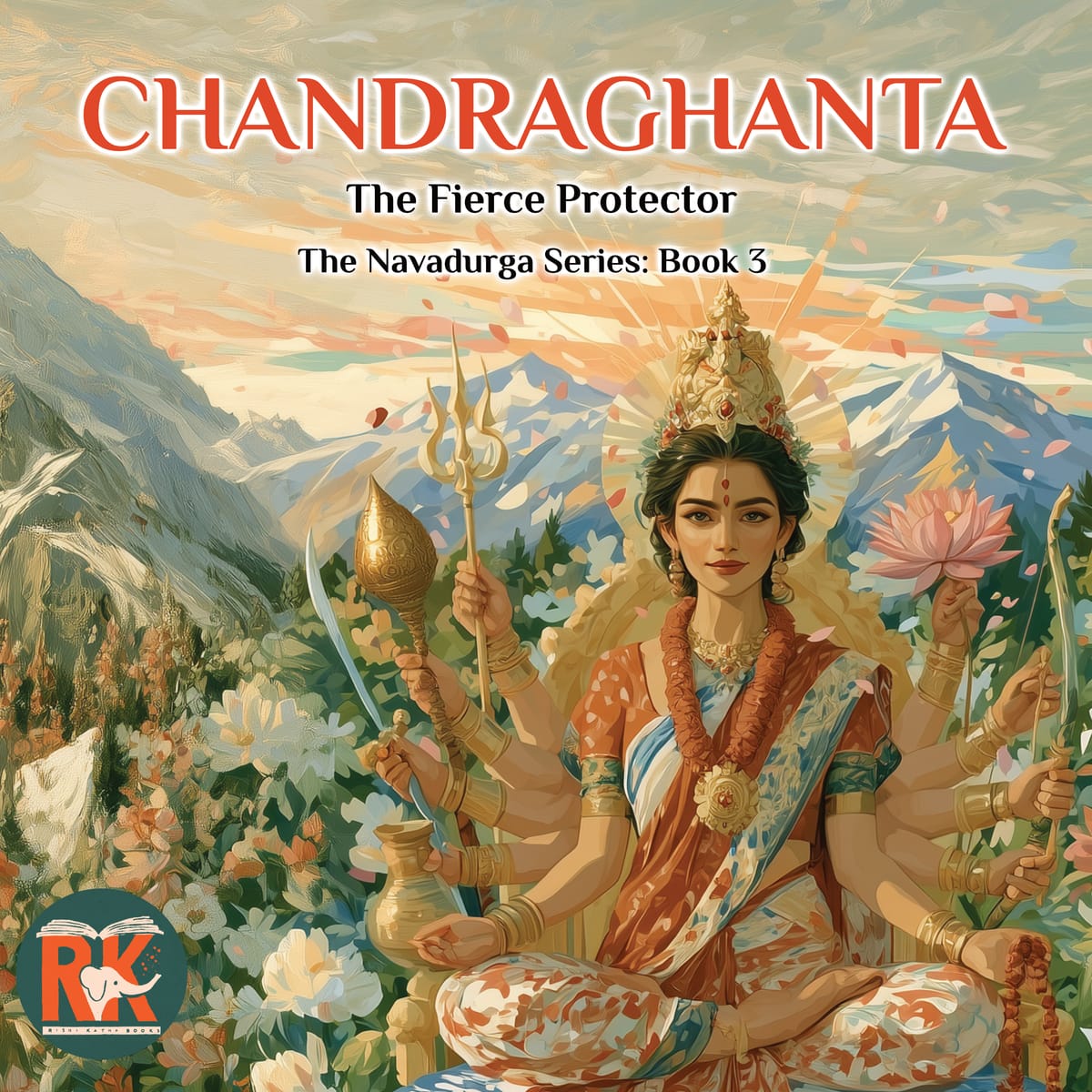
The most common telling goes like this. A powerful demon, Mahishasura, became so strong that no one could stop him, and he troubled everyone. The gods each gave a little of their own strength, and together it became a goddess: Durga. She rode a lion, held many weapons in her many hands, and faced the demon. They fought for nine nights. On the tenth day she won, and that is Vijayadashami, the day of victory.
In other parts of India, the tenth day is about Lord Rama defeating the ten-headed Ravana, and large Ravana figures are burnt in the evening. Neither telling is "wrong". Different places remember different stories on the same day.
Why nine forms of Durga?
Each night shows a different side of the same Goddess: calm like a mountain, determined, brave, creative, motherly, fierce, scary-but-kind, forgiving and wise. That makes Navratri easy to share with children, since each night there is one quality to talk about. Our guide to the nine forms of Durga lists the story and lesson for each night, and the vahana chart shows which animal each goddess rides.
How is Navratri celebrated across India?
| Region | How kids see it |
|---|---|
| Gujarat | Garba and dandiya raas — dancing in circles every night |
| Bengal | Durga Puja — large decorated pandals, mostly on the last five days |
| North India | Fasting, Kanya Pujan, and Ramlila ending with Ravan dahan on Dussehra |
| South India | Golu (Bommai Kolu) — steps of dolls displayed at home |
| Mysuru | Dasara processions and the lit-up palace |
Whichever your family follows, the heart is the same: stories, music, and gathering together.
What can I say at each age?
Ages 4–5: one sentence
"Navratri is nine special nights when we remember a strong, kind goddess who looks after everyone. Every night we hear a story about her."
Ages 6–7: add the story
"A bully called Mahishasura was troubling everyone, so all the gods gave a bit of their strength to make Goddess Durga. She stood up to him. We celebrate that good wins in the end."
Ages 8–10: add the meaning
"Each night we remember a different quality: courage, patience, joy, forgiveness. The goddess in each story is showing us something we can practise ourselves." Then ask: "Which one do you think you're best at? Which would you like to learn?"
How can we make Navratri easy and fun at home?
- Read one goddess's story each night. Our storybooks are made for exactly this, for ages 4–10.
- Pick one small activity a night. See our nine days of ideas.
- Ask one question after the story. Simple ones work best: "What was she brave about?"
- Keep it short. Ten minutes a night is plenty.
Frequently asked questions
What does Navratri mean?
Navratri means 'nine nights' in Sanskrit: nav is nine and ratri is night. The festival honours the Goddess Durga across nine nights, followed by a tenth day, Vijayadashami (Dussehra).
Why do we celebrate Navratri?
Many families celebrate the victory of good over evil. In one telling, Goddess Durga fought the buffalo demon Mahishasura for nine nights and won on the tenth. In another, the tenth day marks Lord Rama's victory over Ravana. Both are told in different parts of India.
How many times is Navratri celebrated in a year?
Two main Navratris are widely celebrated: Chaitra Navratri in spring and Sharad Navratri in autumn. Sharad Navratri, in September–October, is the best known. In 2026 it runs from 11 to 19 October.
At what age can I tell my child the Navratri story?
Children as young as 3 or 4 enjoy a simple version: a kind, strong goddess who protects everyone from a bully. Add more detail as they grow, one layer at a time.