What does the name Kushmanda mean?
The name is usually split into three small words:
- Ku, meaning a little
- Ushma, meaning warmth or energy
- Anda, meaning egg
Put together, it is "the one who made the cosmic egg with a little warmth". The picture is of a universe that began as a tiny egg, warmed into being.
Why is the goddess linked to a pumpkin?
In Sanskrit, kushmanda is also the word for the pumpkin or ash gourd. In some traditions it is a favourite offering to the goddess, and in many homes pumpkin is among the vegetables eaten during Navratri fasting. Children usually love this part. A goddess named after a pumpkin is not an idea they expect.
Names in the tradition often hold two meanings, one cosmic and one ordinary, side by side. It is a pleasant reminder that big things and small things belong together.
What is the story of Kushmanda?
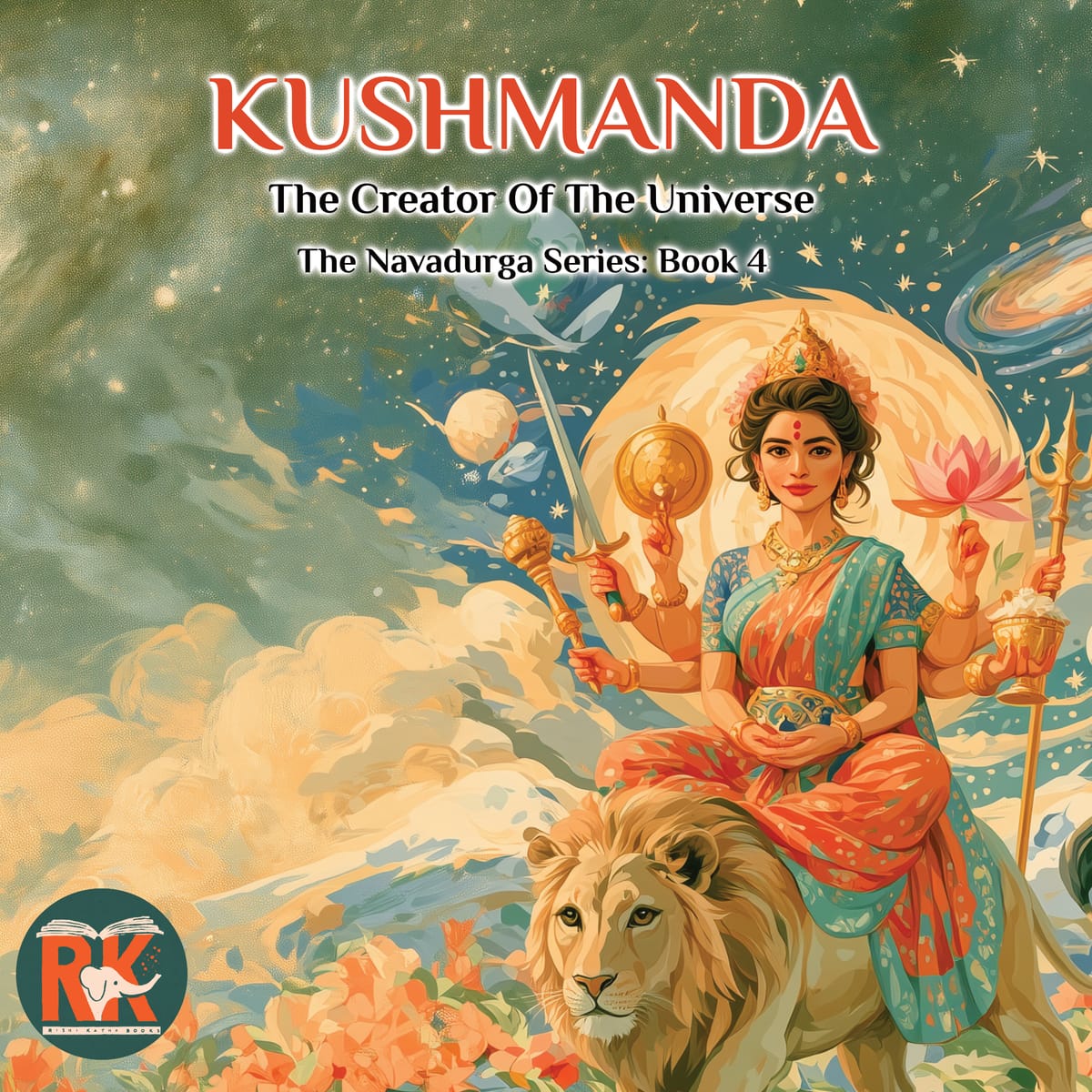
Before anything existed, there was only darkness. Then Kushmanda smiled, and from her gentle laughter and light, the universe bloomed. She is said to live in the heart of the sun, giving warmth and light to everyone. She is usually shown with eight arms, riding a lion, holding among other things a lotus and a pot of nectar.
The lesson for children is joy and creativity: "One smile can light up the whole world." That is easy for a four-year-old to try on a Wednesday.
When is Kushmanda worshipped in Navratri 2026?
On the fourth night of Sharad Navratri: Wednesday 14 October in 2026. Check your family's panchang, as some families follow a different day.
Fun ways to celebrate Kushmanda's day with kids
- Draw the sun. A big smiling sun with the goddess in the middle, the way she is said to live in its heart.
- Cook a pumpkin dish together. Kaddu is a common Navratri-fasting vegetable. Let your child do the washing and stirring.
- "Smile for the day". Each person gives one smile to someone who looks sad. Report back at dinner.
- Make an "egg" of the universe. Paint a boiled egg or a paper oval with stars and planets.
More ideas for all nine days are in Navratri activities for kids.
Read her story
Kushmanda's own picture book, Kushmanda: The Creator of the Universe, is Book 4 of the Navadurga Series and is available now, along with Books 1–3, 5 and 6 — or as part of Set 2 (Books 4–6). For the animals of all nine goddesses, see the vahana chart.
Frequently asked questions
What does Kushmanda mean?
Kushmanda is read as ku (little), ushma (warmth or energy) and anda (egg): the one who created the cosmic egg, the universe, with a little warmth and a smile. Kushmanda is also the Sanskrit word for the pumpkin or ash gourd.
Why is Kushmanda connected to a pumpkin?
In Sanskrit, kushmanda also means pumpkin (ash gourd), and in some traditions pumpkin is a favourite offering to the goddess. The name carries both meanings, the cosmic egg and the pumpkin.
Which day of Navratri is Kushmanda?
The fourth day. In 2026 that is Wednesday 14 October, by the calendar we follow. Check your family's panchang.
What animal does Kushmanda ride?
A lion. She is usually shown with eight arms holding, among other things, a lotus and a pot of nectar.